Understanding MSI
What is Multispectral Imaging?
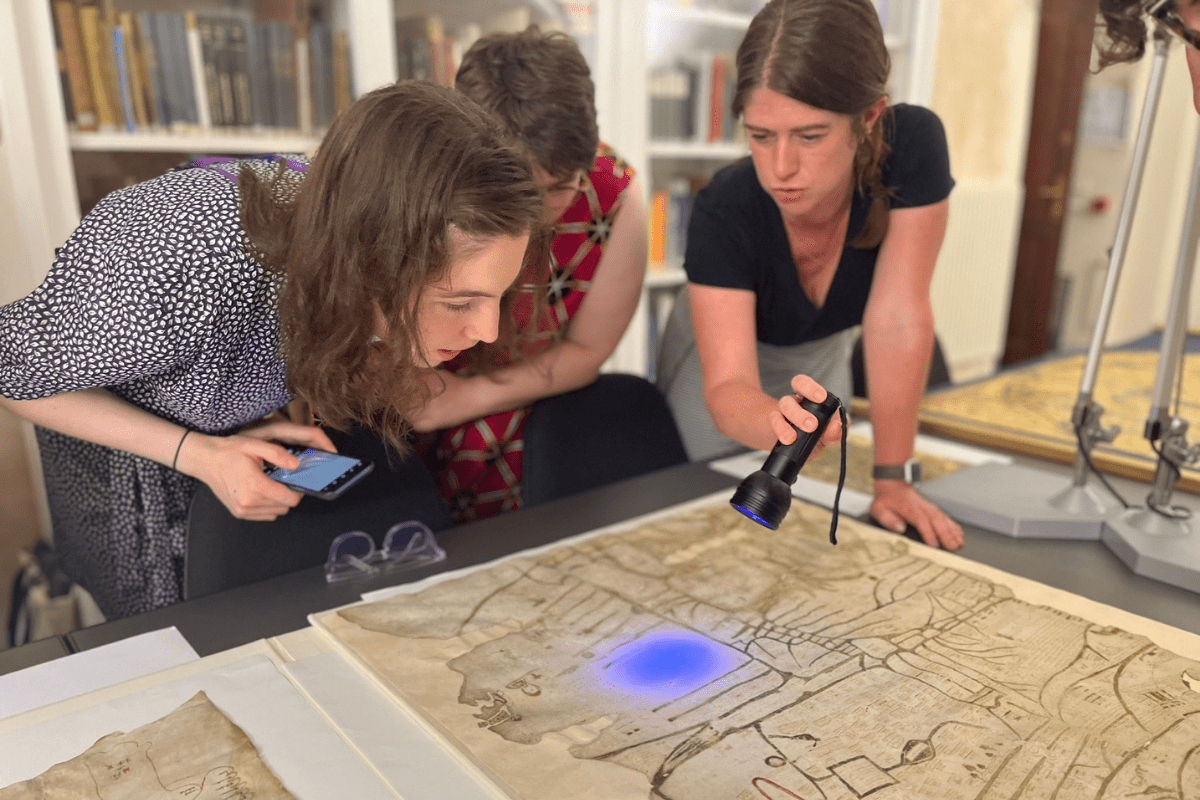
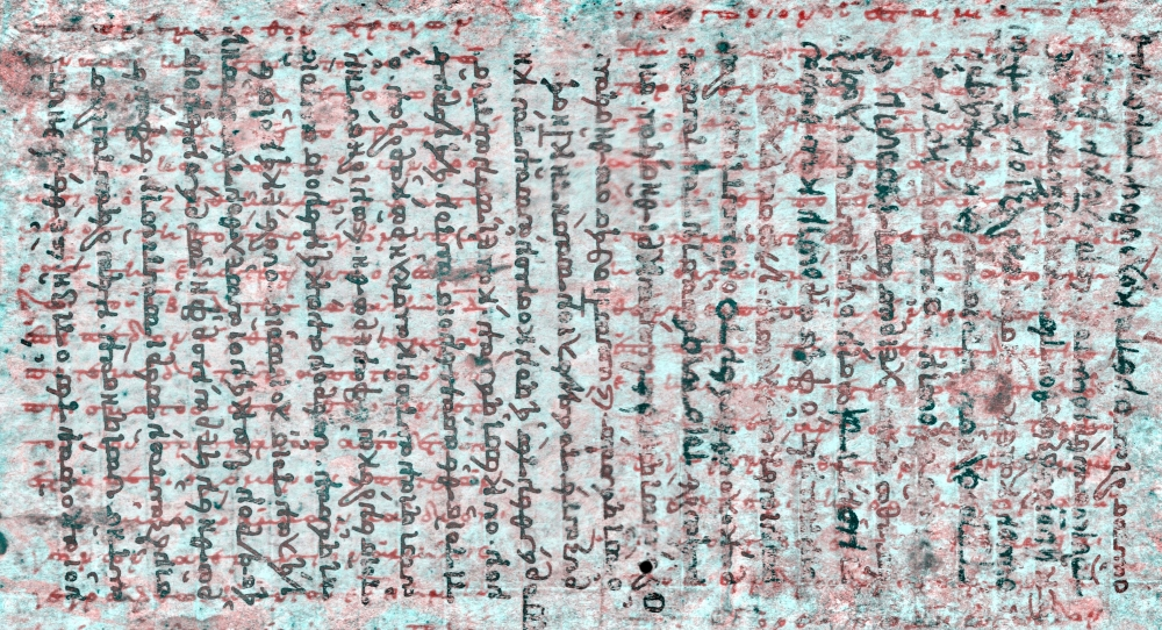
Multispectral imaging (MSI) for cultural heritage is a non-destructive digital recovery technique that uses photographic data to recover content from damaged objects. By collecting data beyond the visible spectrum, MSI systems allow investigators to see data invisible to the human eye, including erased, damaged, or faded markings. To collect this data, MSI systems need at minimum a specialized camera and a controlled light source. This setup allows for images to be captured from the range of light wavelengths, from ultraviolet, through the visible spectra, and into the infrared. MSI scholars photograph an artifact under controlled bands of light, taking one photo per wavelength. These individual photographs can then be recombined using statistical image processing. This final step allows the viewer to see data that is not visible in the original object. Multispectral imaging provides remarkable results on texts that have been damaged by fire, water, erasure, or simply faded by time.

How did this approach develop?
In the early 2000s, a reclusive billionaire purchased a palimpsest manuscript that was rumored to contain a lost text by the ancient Greek mathematician Archimedes. During the Middle Ages, palimpsesting was a common technique to reuse parchment. Like leather, parchment was derived from animal skin and involved a costly and laborious finishing process, creating a premium on writing substrates. To preserve this limited resource, scribes would erase a text and turn the parchment 90 degrees before writing over the previous text. Luckily for us, the majority of the texts were not permanently erased.
The Archimedes Palimpsest Project was one of the first endeavors to implement multispectral imaging on a document. Developed for remote sensing and satellite imaging, MSI was initially used for military and mapping purposes. The Archimedes Palimpsest team made significant innovations to MSI for cultural discovery and were able to use this approach to successfully recover the lost text of Archimedes.
How is the Ghost Camera Project different from multispectral imaging?
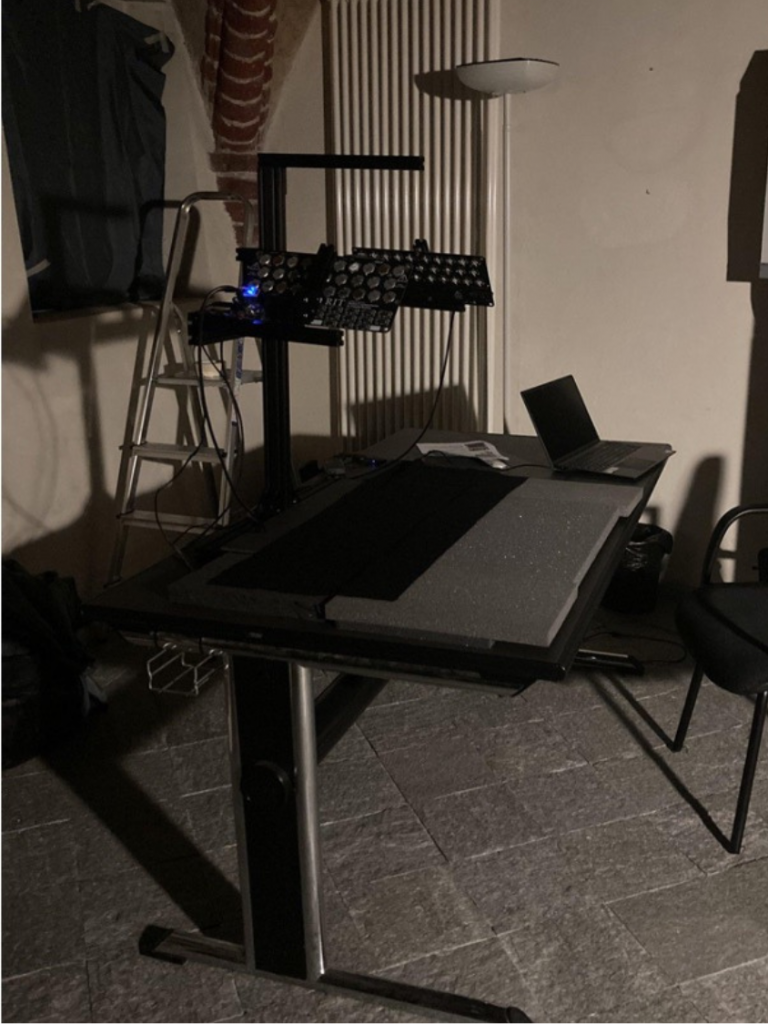
Unfortunately, the technology required to recover materials in this manner costs a significant amount. Traditional MSI requires highly specialized cameras that can capture beyond the visible spectrum as well as a means of controlling the surrounding light. The highest-end systems today include cameras with specialized lenses to capture sharp data in light waves beyond the visible and narrow-band LEDs to emit specific light waves at a time. While these systems are portable, they can be cumbersome to transport to other locations. The Ghost Camera project, building on the innovative work on the MISHA project by Rochester Institute of Technology, sought to solve these issues by creating a new system and methodology consisting of more widely available and affordable technology.
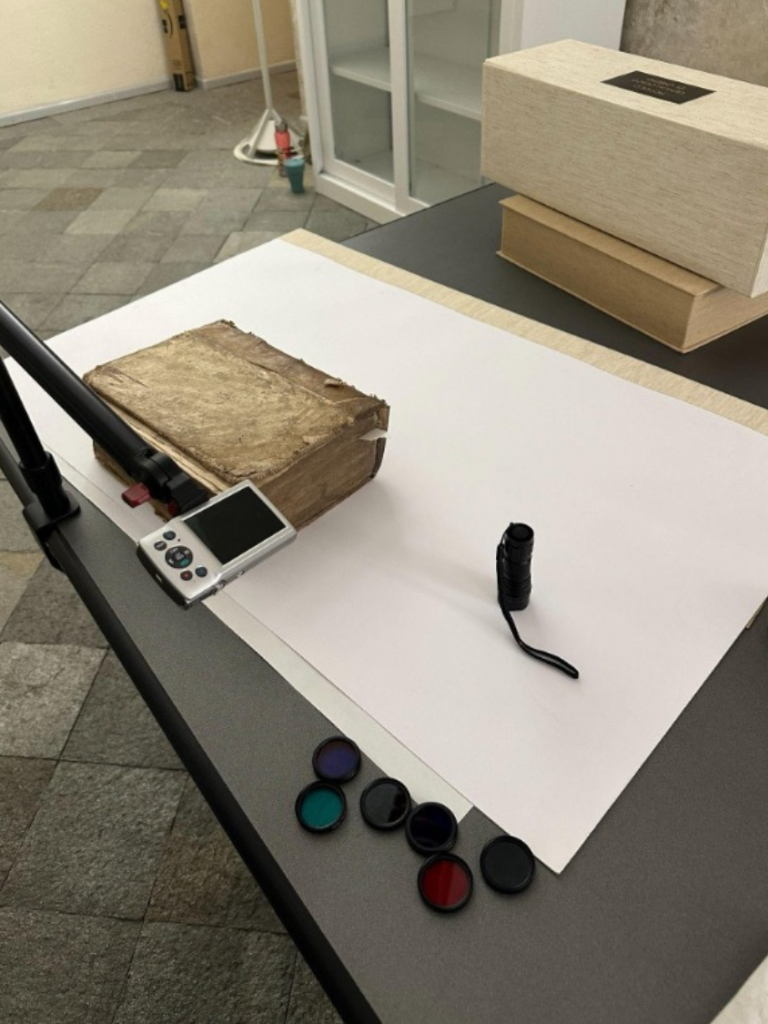
Our project has identified a series of full-spectrum cameras that operate reliably and can capture light beyond the visible spectrum into the UV and infrared ranges. These point and shoot cameras do not have the high price tag of scientific cameras, as they are instead intended for amateur photographers experimenting with infrared photography. As a side note: the website sells cameras of a higher caliber and higher price point, which were originally designed for astrophotography and forensic imaging.
The other aspect of MSI that needs to be closely monitored and controlled is the light in the imaging area. Traditionally, the light is manipulated through computer-controlled LED panels that flash in sequence. The Ghost Camera approach instead controls the lighting of the area through lens filters and a UV/IR flashlight. The lenses, designed for amateur photography cameras, are more affordable and effectively isolate specific bands of light. Further lighting control can be accomplished through the manipulation of an ultraviolet and infrared flashlight, which can be purchased online for about 12 dollars each.
Further Reading
- Hanneken, Todd R. “What to Think about When Thinking about Digitization of Manuscripts.” Digital Philology: A Journal of Medieval Cultures 12, no. 2 (2023): 256-284.
- Jones, Cerys, Christina Duffy, Adam Gibson, and Melissa Terras. “Understanding multispectral imaging of cultural heritage: Determining best practice in MSI analysis of historical artefacts.” Journal of Cultural Heritage 45 (2020): 339-350.
- Davies, Helen, and Alexander J. Zawacki. “Making Light Work: Manuscripts and Multispectral Imaging.” Journal of the Early Book Society 22 (2019): 183-199.
- Netz, Reviel., Noel, William. The Archimedes codex : revealing the secrets of the world’s greatest palimpsest. London: Weidenfeld & Nicolson, 2007.
- Endres, Bill. Digitizing Medieval Manuscripts: The St. Chad Gospels, Materiality, Recoveries, and Representation in 2D and 3D. United Kingdom: Arc Humanities Press, 2023.