
Managing an MSI Project
A project can be initiated in a variety of ways. Maybe you saw a damaged object that piqued your interest, maybe you have a specific research question and are looking for objects to match, maybe you’re tasked with managing someone else’s project. Whatever your path is, establishing a project plan from the start will help focus the project and streamline resource management.
Imaging projects are always cooperative in nature. Having a good plan from the beginning will improve communication and be key to opening doors for future projects. To help first-time PIs (Primary Investigators, or project leads), we have broken down managing a typical MSI project into six parts. You may have institution-specific processes and procedures to follow as well, but this will provide an overall structure to get you started. Always check with your institution or the institution holding the objects you’re interested in to see if they have their own processes.
One. Initial Interest.
The initial planning stage depends on what inspired you. Are you building the project around an object? A collection? A question? If you already know the object or collection you want to work with, review the “Working with Artifacts” page and move on to step 3. If you’re starting from a research question, you will need to spend time locating an archive or collection with materials that align with your interests. Take the time to learn about the institution and collection first, particularly its background and the circumstances of its formation. Once you have that groundwork, you can contact the collection stewards about imaging. This approach is how a member of the Illuminating the Past team became involved with the multispectral imaging collective Videntes.
Two. Build a Relationship with the Object Owner or the Archive.
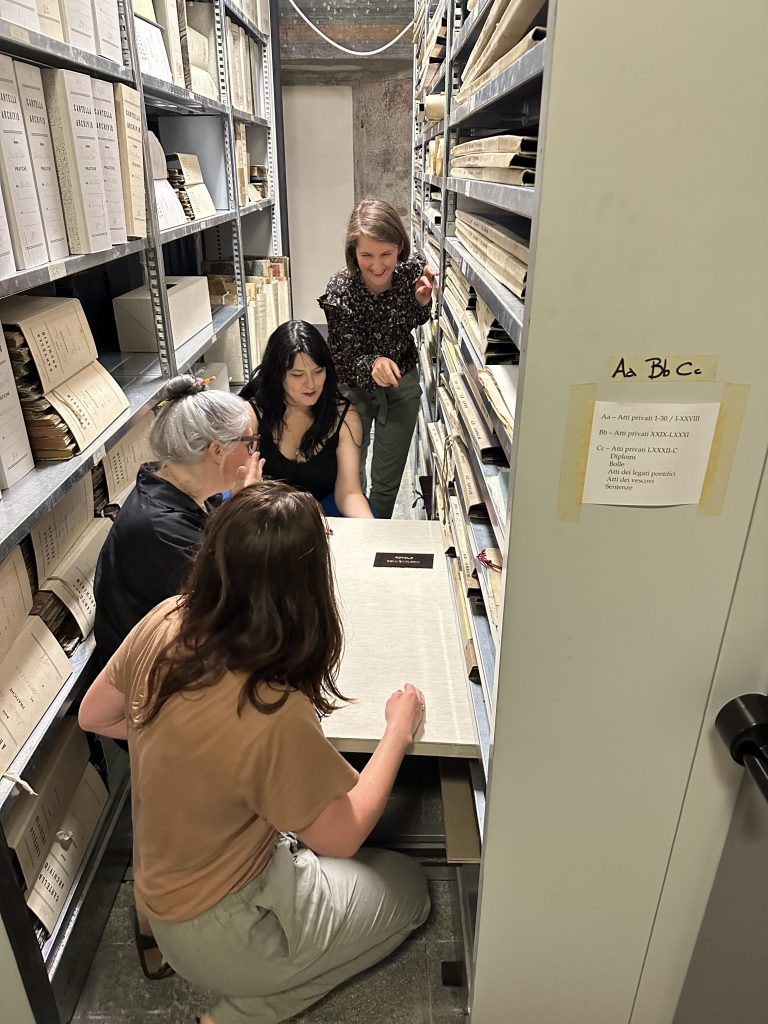
Remember that archivists, librarians, or other collection stewards are experts. Building a positive relationship with them from the start is a crucial first step. Some may be skeptical about the imaging process or about having imaging equipment around their collections. Be open and honest about your research interests and what you hope to do, learn, and collect. Start by discussing the following:
- Whether you’re allowed to access the object.
- Their rules for object handling.
- Whether you have permission to do your imaging work in the archive, or whether you will need to move the object out of its home.
- Whether you can move the object and what restrictions on time, place, or length of time outside the object’s housing there might be.
- Whether the collection will want access to your raw imaging data, processed data, or some combination of both. It is best practice to offer as much data as possible.
- Who will own the rights to the data and the processed images. Establishing rights and permissions upfront will make publication or data sharing smoother at the end.
Establishing who holds what rights to publish, share, or reproduce images is arguably the most important element to determine ahead of time, directly after whether you have permission to take pictures in the first place. You will not want to work out publication, raw data access, and who owes what to whom after the fact.
Ultimately, the stewards of the object or collection may be unwilling to let you image an object, whether that’s because of the poor state of the material or because of the archive’s situation. Even though this may be frustrating, remember that they are the experts and no means no. It is better to clarify all expectations at the start than to have to abandon a half-done project.
Three. Determine the State of the Object.
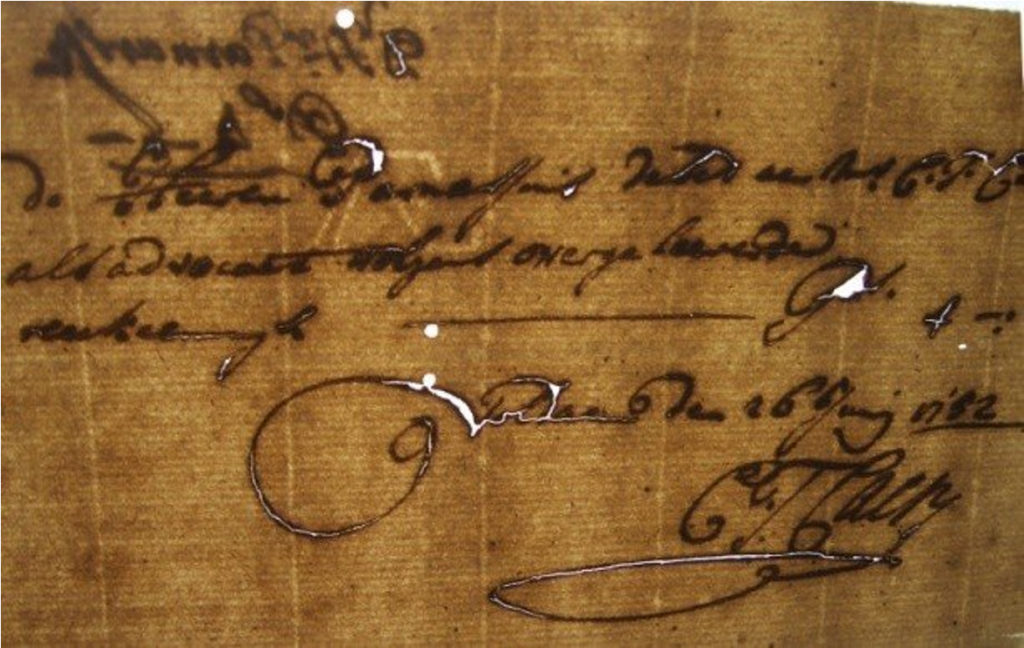
As advanced as multispectral imaging technology is, not all objects will produce recovery results. There may be too much damage or graffiti. There might not be enough material remaining. There can be other pathways forward for a project if your first choice object or objects isn’t optimal for an MSI approach. Creativity is one of the core principles of digital humanities. You may want to take some test pictures to determine the likelihood of recovery before undertaking a full project.
Four. Charter Your Project.
Once you have the green light from the collection stewards, it’s time to get into the nuts and bolts of project management. We use and recommend this template from the Indiana University Bloomington Institute for Digital Arts and Humanities (Dalmau, Craig, Elias, Ton, Duke, Story, Purcell, Shahidi, Heiderscheidt, Howard, Cissell), Indiana University (2017-2024):
That may feel like a lot to consider, but the more you plan at the beginning, the smoother the overall process will be. Some elements we want to particularly emphasize are planning for data management and sharing, building your team, and seeking funding.
Data Management
It’s so exciting to think about the process of gathering your data. It’s less exciting to think about its afterlife. Once again, we want to emphasize that you should lay out a plan that includes the holding institution, but you should have thoughts about where data will live and how it will be accessible before you begin the project. Those thoughts should be flexible enough to allow you to make changes based on the needs of your partners and on the ways your project might be shaped by executing your plans. But you should think about what you plan to do with your data at the end from the start.
Building Your Team
Each member of a team usually brings a set of specialized interests and skills to the execution of the project. The group you assemble can look like any combination of scholars, technologists, librarians or archivists, imaging specialists, students, administrative people, grant writers, and other subject matter experts. They should all complement each other. Some people may join you only for certain parts of the process, but you should have a core group that will see the full life cycle of the project. At least one of those people needs to think about fundraising and grant writing from the beginning.
Seeking Funding
Because, in the United States at least, the grant writing cycle takes such a substantial amount of time, you will need to think about funding your work from the get-go. This is specialized work, and you will benefit from at least consulting with someone who does grant writing professionally, even if you can’t formally bring them on board for the whole project. Don’t put all your eggs in one basket. Think broadly about how you might secure funding for your research.
Five. Execute Your Project.
Finally! You get to actually do something that feels like research! Remember to communicate with your project team throughout the process. Keep people in the loop even if the part of the project that they’ll be working directly with hasn’t come up yet. You’ll want people to be able to smoothly enter and exit the work to contribute their expertise and knowledge while feeling valued and like they’re getting something out of the project. Keep good records throughout the process as well. Rarely are Digital Humanities projects one and done. You will want to learn from your past self, as will your colleagues. For help with doing the imaging itself, check out the “Using the Ghost Camera” page.
Six. Close Out.
Congratulations, you did research! You’ve turned your data over to your collection steward partners, you’ve set up a long-term access and preservation strategy, and you’ve submitted something for publication or planned for a more publicly accessible final product. Get everyone together and celebrate!
It’s worth having a formal project postmortem to discuss what worked, what didn’t, and what you learned from the process, in addition to what you learned from the research. Gather everyone one last time (or solicit their feedback asynchronously if you can’t get everyone in a virtual or in-person meeting) and discuss. We also recommend cake or another celebratory dessert at this meeting. You did something big! You should celebrate it